
The Cumulux blog
What is Circadian Lighting and what it changes for sleep and alertness

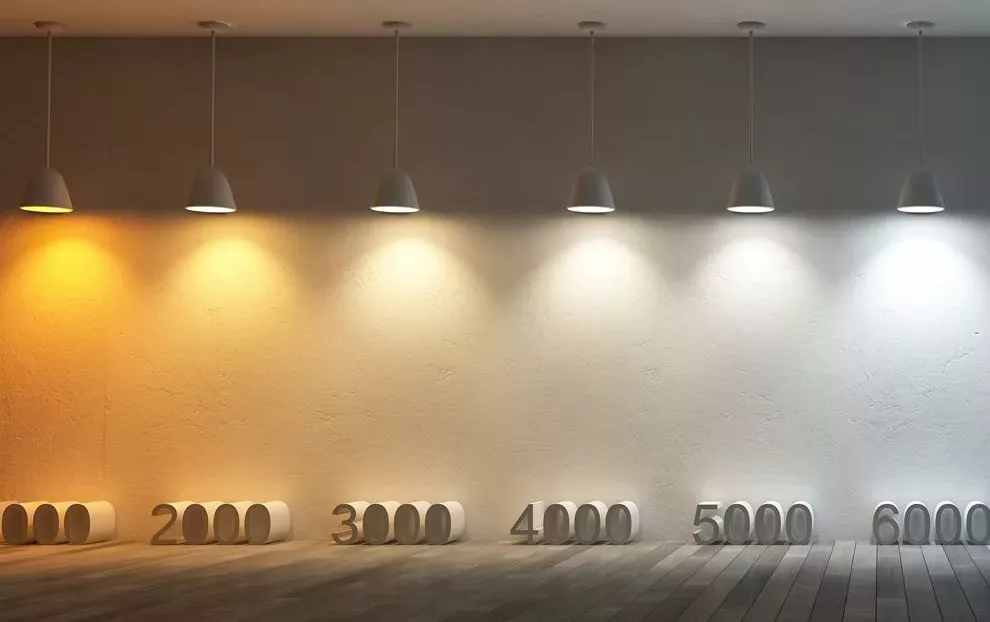
Circadian lighting is dynamic lighting whose colour temperature and intensity change through the day to follow natural daylight. It is spreading fast in hospitals, care homes and offices, because indoor light rarely gives the body the signals it needs. Here is how circadian lighting works, what clinical studies actually show and how to choose a system for your building.
Key takeaways
- Circadian lighting shifts from cool, bright light in the morning to warm, dim light in the evening, to keep the body clock in step with the time of day.
- The strongest evidence concerns sleep and alertness: hospital patients and night workers sleep longer and stay more alert under circadian lighting.
- In offices, the clearest benefit of circadian lighting is a sharper afternoon, while the effect on productivity remains unproven.
What is the circadian rhythm, and why does light control it?
The circadian rhythm is the body’s internal clock. Over a cycle of roughly 24 hours, it regulates sleep, body temperature, hormone release and alertness.
Light is the main signal that keeps this internal clock on time. Light-sensitive cells in the retina send information to the brain’s master clock, located in the hypothalamus, which then tells the body when to release melatonin, the hormone that prepares us for sleep.
The type of light matters as much as the amount. Bright, bluish morning light tells the body that the day has started and holds back melatonin. Warm, dim light at the end of the day does the opposite and lets melatonin rise before bedtime.
Modern life has broken this balance. A large survey of the US population found that people spend on average 87% of their time inside buildings and another 6% in vehicles. Indoors, most artificial lighting stays at the same colour and intensity from morning to night, so the body receives mixed signals about when to be awake and when to sleep.
What is circadian lighting, and how does it work?
Circadian lighting is a lighting system designed to work with the body clock rather than against it. Instead of delivering the same light all day, it reproduces the daily changes of natural daylight indoors.
A circadian lighting system changes two settings over the course of the day:
- Intensity: the light is bright in the morning to support waking up, stays high during the working day and drops in the evening.
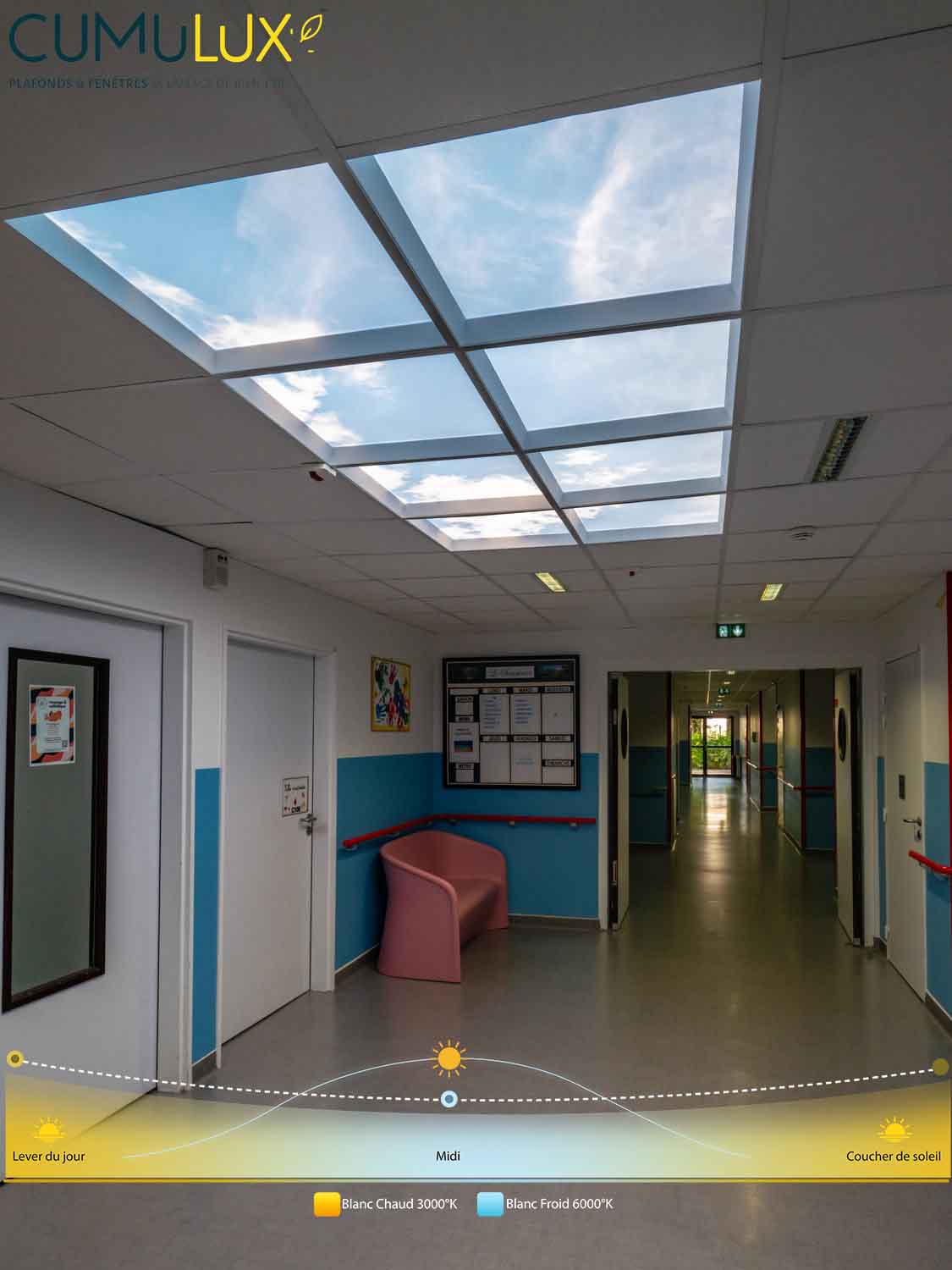
- Colour temperature: the light is neutral to cool during the day, typically between 4,000 and 6,500 K, then turns warm in the evening, between 2,700 and 3,500 K, like a sunset.
The goal of circadian lighting is simple: recreate indoors a light environment close to the outdoors, so that the body receives the right signal at the right time.
Good to know
Colour temperature alone does not say how strongly a light acts on the body clock. Lighting researchers increasingly measure the “melanopic” effect of light, which reflects the part of the spectrum picked up by the retina’s clock-setting cells.
What are the benefits of circadian lighting for health?
Circadian lighting acts on the body clock, and the effects can be measured in daily life. Clinical studies point to three main benefits.
- Longer, better sleep: by letting melatonin rise at the right time in the evening, circadian lighting helps people fall asleep earlier and sleep longer at night.
- Higher alertness during the day: a strong light signal in the morning and early afternoon reduces sleepiness, especially during the post-lunch dip.
- A steadier body clock: regular light cues help people whose rhythm is fragile, such as night workers, hospital patients and older adults.
Some studies also report effects on mood, particularly among care home residents living with dementia. These results are covered in the healthcare section below.
Key takeaways
- First key point, in one sentence.
- Second key point, in one sentence.
- Third key point, in one sentence.
What does circadian lighting change in hospitals and care homes?
Hospitals and care homes are where circadian lighting shows its most striking results. Patients and residents often spend whole days indoors, under lighting that never changes, with sleep disturbed by noise and care routines.
Longer sleep for hospital patients under circadian lighting
A study in a cardiology unit at Mount Sinai Hospital in New York compared 87 patients in rooms with programmed dynamic lighting or with standard hospital lighting. Patients under dynamic lighting had their rest-activity rhythm advanced by 160 minutes, as well as 66 more minutes of sleep between 11 pm and 7 am.
The same patients also reported feeling more alert, both in the morning and in the evening. The authors conclude that dynamic lighting systems have the potential to improve sleep for hospitalised patients.
Fewer falls on rehabilitation wards and in care homes
Falls are one of the most serious risks for older patients, and circadian lighting appears to reduce them. In a 49-bed subacute and rehabilitation ward in Japan, the share of patients who fell dropped from 15.0% under fluorescent lighting to 7.4% after circadian lighting was installed.
That Japanese study is retrospective, and the ward was renovated at the same time as the lighting changed, so the result calls for caution. A larger study in four care homes, covering 758 residents, points the same way. Falls were 43% lower at the sites fitted with lighting that changed in intensity and spectrum through the day than at the sites that kept standard lighting.
Better sleep and mood for residents living with dementia
People living with dementia often lose their sense of day and night, which leads to night-time waking and agitation. A randomised controlled trial in eight long-term care facilities tested an all-day lighting intervention on 46 residents with Alzheimer’s disease or related dementias.
Under the active lighting, residents slept better according to a standard sleep quality questionnaire, and their depression and agitation scores improved. Circadian lighting therefore stands out as a non-drug approach for secure dementia units, where residents have lost their bearings in time.
Does circadian lighting work for night shifts and offices?
At work, circadian lighting brings its clearest benefits to night-shift teams. In offices, the evidence is more modest and points mainly to a less sleepy afternoon.
Circadian lighting for night-shift staff
Night work forces the body to stay awake when the internal clock calls for sleep. In a laboratory study published in the journal Sleep, 19 healthy adults went through simulated night shifts under circadian-informed lighting and under dim control lighting, in random order.
By the end of the night shifts, participants had about half as many attention lapses on a reaction-time test under circadian-informed lighting. By the seventh day, they also slept 52 minutes longer during the day.
Cumulux has run its own field studies with its partner Libu, using self-assessment questionnaires designed with chronobiology researchers and occupational health services. In 2023, 60 Enedis employees working round-the-clock shifts on grid monitoring and emergency calls in France took part.
- +10 %Sleep quality
- -12 %Sleepiness
- +7 %Mood
- -28 %Perceived stress
Self-reported scores, Cumulux field study with Libu, Enedis, 60 employees on round-the-clock shifts, 2023.
Circadian lighting in offices and open-plan spaces
In offices, the most consistent benefit of circadian lighting is less sleepiness in the afternoon. A four-month study of office workers in a living lab found a significant rise in afternoon alertness under dynamic lighting.
The same office study found no measurable difference in productivity, stress or visual comfort. Participants even reported shorter, poorer sleep after days under dynamic lighting. Circadian lighting in offices is therefore best seen as a way to make the working day less tiring, rather than as a productivity tool.
Which circadian lighting system should you choose?
Circadian lighting is no longer reserved for hospitals and large building projects. Systems now exist for very different uses and budgets.
Smart bulbs, a first step for homes and small offices
For a home or a single office, several brands sell connected bulbs that change colour temperature and brightness through the day. These bulbs are easy to install and controlled from a phone app.
Smart bulbs remain limited for professional spaces. Their scenes are standardised, they cannot be managed for a whole team and they do not connect to the building management system.
Circadian artificial windows for windowless rooms
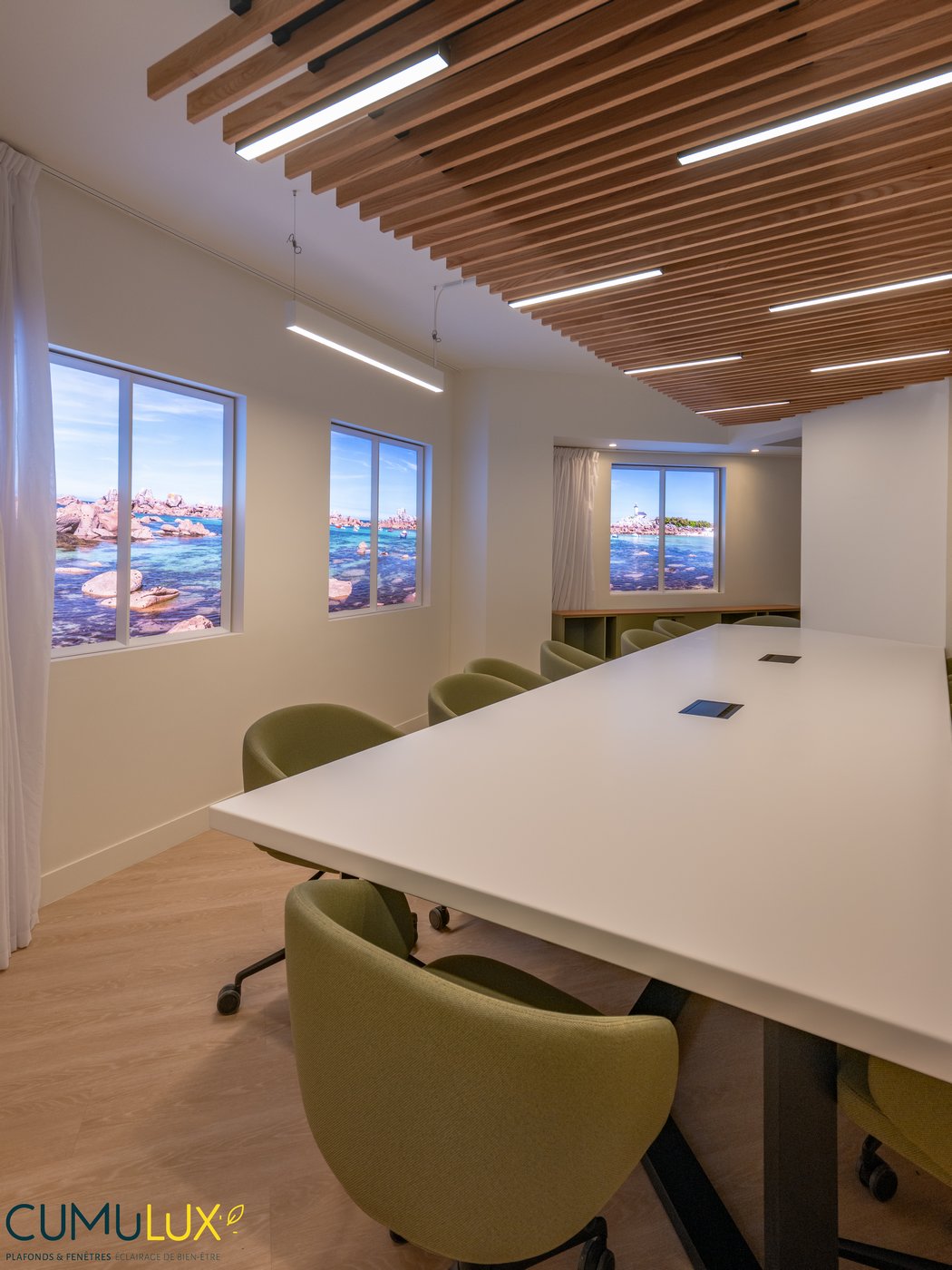
Between connected bulbs and full installations, artificial windows offer a middle way. A circadian artificial window combines a backlit landscape photograph with lighting that follows the course of the day.
Circadian artificial windows are particularly useful in rooms without daylight, such as:
- consultation rooms and treatment rooms in medical practices;
- basement offices and windowless meeting rooms;
- staff rest areas and night-shift control rooms.
Installing a circadian artificial window does not require any structural work, since the window is fixed to the wall like a light fitting. The Cumulux artificial windows, for example, are controlled wirelessly over Bluetooth and range from 2,700 K to 6,500 K.
Circadian lighting systems for hospitals, care homes and open-plan offices
For large open-plan offices or healthcare buildings, circadian lighting becomes a complete system built into the building. Such a system usually combines:
- circadian light ceilings covering large surfaces;
- artificial windows for areas with no daylight;
- programming tailored to the hours of use, and to night shifts where needed.
Manufacturers such as Cumulux design this type of installation. The Cumulux circadian sky ceilings shift from 2,700 K to 5,000 K over the day, are controlled over DALI and are programmed in the factory for every day of the year.
The aim of a circadian lighting project is no longer just to light a room. It is to give each space a daily light pattern that supports the comfort, alertness and sleep of the people who spend their days there.
Your questions, answered
Is circadian lighting the same as light therapy?
No. Light therapy uses a very bright lamp for a short session each day, usually to treat a specific condition. Circadian lighting changes the ambient lighting of a room throughout the day, so the people inside receive the right light signal without changing their routine.
Can circadian lighting harm sleep?
Circadian lighting is designed to protect sleep, by dimming and warming the light in the evening. One office study, however, recorded poorer self-reported sleep after exposure to dynamic lighting, which shows that the programme must be set carefully to the hours of the people using the space.
Where is circadian lighting most useful?
Circadian lighting brings the clearest benefits where people spend long hours without daylight. Hospitals, care homes, night-shift control rooms and windowless offices are the settings where studies show the strongest effects on sleep and alertness.
Sources
- Dunn AS et al., The Impact of Dynamic Lighting on Sleep Timing and Duration for Hospitalised Patients, Journal of Sleep Research, 2025
- Okinami T et al., Circadian Lighting Was Associated with a Reduction in the Number of Hospitalized Patients Experiencing Falls, Healthcare, 2025
- Grant LK et al., Impact of Upgraded Lighting on Falls in Care Home Residents, Journal of the American Medical Directors Association, 2022
- Figueiro MG et al., Effects of a Tailored Lighting Intervention on Sleep Quality, Rest-Activity, Mood, and Behavior in Older Adults With Alzheimer Disease and Related Dementias, Journal of Clinical Sleep Medicine, 2019
- Scott H et al., Circadian-informed lighting improves vigilance, sleep, and subjective sleepiness during simulated night-shift work, Sleep, 2024
- Zhang R et al., Impacts of Dynamic LED Lighting on the Well-Being and Experience of Office Occupants, International Journal of Environmental Research and Public Health, 2020
- Klepeis NE et al., The National Human Activity Pattern Survey (NHAPS), Journal of Exposure Analysis and Environmental Epidemiology, 2001
About Cumulux
Cumulux has designed and manufactured backlit sky ceilings and artificial windows in France since 2017, for hospitals, care homes, medical practices and offices without daylight.